SMSA 2026 Workshop
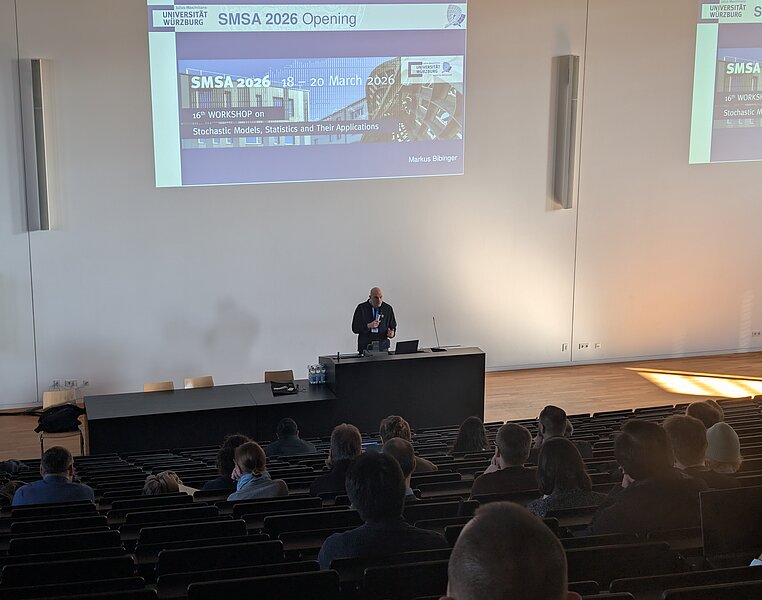
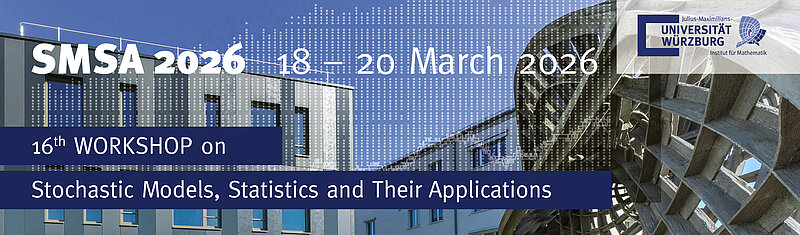
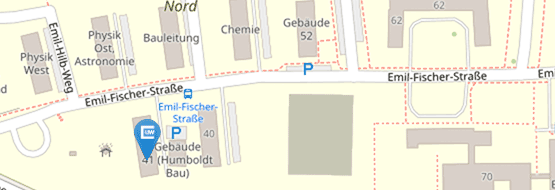
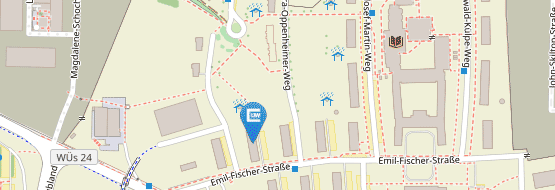
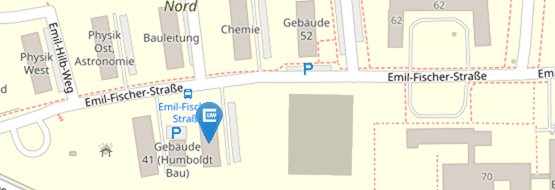
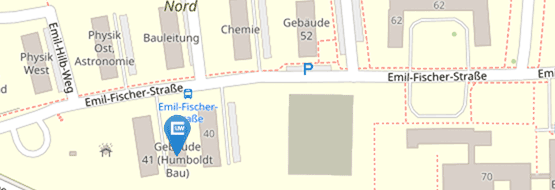
We organized and hosted the 16th Workshop on Stochastic Models, Statistics and Their Applications (SMSA) at the University of Würzburg from March 18 to March 20, 2026, at the Zentrales Hörsaal- und Seminargebäude (Z6) on Campus Hubland.
The event was organized by Markus Bibinger in cooperation with Ansgar Steland (AG-ZQS) and hosted by our local team (Markus Bibinger, Daniel De Sario, Heike Fromm, Rainer Göb, Adrian Grüber, Leonie Herberger, Julian Hopfner, Bastian Kraft, Nina Meyer, Patricia Pelz, Ursula Radler, Ruben Rauch, and Benedikt Vormwald).
We are grateful to the participants for contributing to a rich scientific program featuring 122 talks across 23 sessions, covering recent advances in stochastic modeling, statistical inference, statistical learning, and their applications.
The four plenary lectures highlighted key developments and offered insightful perspectives on current challenges in the field. They were given by
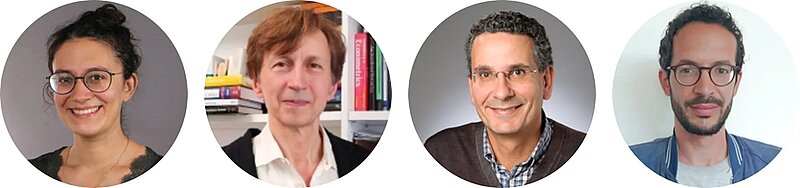
Alexandra Carpentier (Universität Potsdam) on Statistical and computational challenges in unsupervised learning: focus on ranking,
Liudas Giraitis (Queen Mary University of London) on Unlocking the Regression Space,
Axel Munk (Georg-August-Universität Göttingen) on Statistical Optimal Transport in Action: From Theory to Applications,
and Mathieu Rosenbaum (École Polytechnique) on A unified theory of order flow, market impact and volatility.
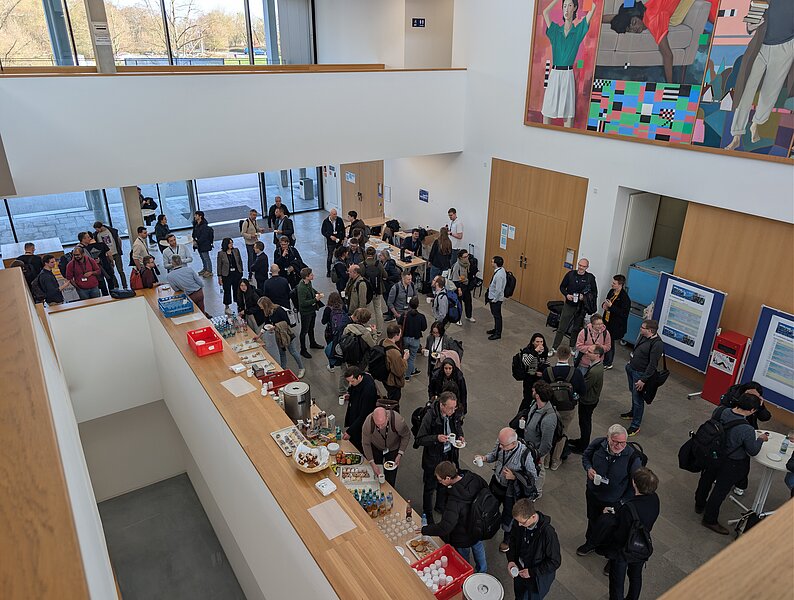
The workshop benefited from a pleasant and stimulating atmosphere that fostered exhange and many fruitful discussions. A total of 156 registered participants, along with additional students of the university, attended sessions featuring excellent speakers on
Advances in Latent Variable Models,
Applied Econometrics,
Computational Biostatistics,
Computational Statistics,
Contributions to Computational Biostatistics and Data Science,
Contributions to Mathematical Statistics,
Data Science Perspectives from Industry,
Discrete Time Series,
High-Dimensional Estimation and Concentration Phenomena,
High-Dimensional Statistics and Learning,
Inference in Wasserstein Spaces and Optimal Transport,
Mathematical Statistics,
Multivariate Statistics and Copulas,
New Developments in Nonparametric Classification and Estimation Based on the Nearest Neighbor Method,
Nonparametric Statistics,
Random Matrix Theory,
Theory of Machine Learning: Insights from Women Researchers,
Statistics for Sports,
Statistics for Stochastic Processes,
Statistical Inverse Problems,
Statistics in Natural Sciences and Technology,
Time Series Econometrics
and Topics in Functional Data Analysis.
These sessions were put together by invited session organizers, whose contributions we gratefully acknowledge.
The conference dinner took place at the Ratskeller in the heart of Würzburg, near the Alte Mainbrücke and other city landmarks.
The conference proceedings of the workshop will be published by Springer in 2027.
We look forward to future editions of the SMSA workshop at other pleasant venues.