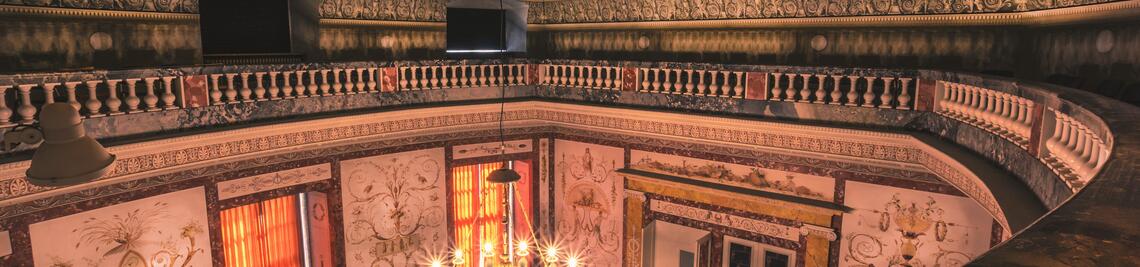

About Würzburg
Würzburg is a historic city in Bavaria, celebrated for its remarkable architecture, vibrant cultural scene, long-standing tradition of winemaking, and significant contributions to science. Located along the banks of the Main River and surrounded by picturesque vineyards, the city blends baroque splendor with academic excellence and a rich heritage.
One of its most famous landmarks is the Würzburg Residence, a stunning Baroque palace and UNESCO World Heritage Site. Overlooking the city is the Marienberg Fortress, a medieval stronghold that once served as the residence of the prince-bishops and today provides panoramic views of the Main River valley. Another architectural gem is the Käppele, a picturesque pilgrimage church built in the Rococo style.
The city is also renowned for its winemaking tradition. Located in the heart of the Franconian wine region, Würzburg is especially known for its Silvaner wines and the distinctive Bocksbeutel bottle shape. Numerous wine festivals, such as the Würzburger Weindorf and the Hofgarten Wine Festival, offer visitors the chance to experience the region’s vibrant wine culture.
Würzburg is also a city of learning and innovation. The Julius Maximilian University, founded in 1402, is one of the oldest universities in Germany and has been home to many notable figures, including Wilhelm Conrad Röntgen, the discoverer of X-rays. Students are a major part of the population.
This unique blend of history, culture, science, and joie de vivre makes Würzburg a city of exceptional charm and quality of life, attracting visitors from around the world.
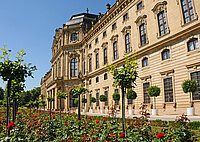
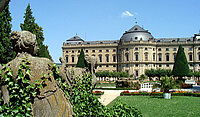
Würzburg Residence
From 1720 to 1744, the shell of the former residence of the Würzburg prince-bishops was built and completed until 1780 to become one of the most prominent baroque castles in Europe. The first builder, prince-bishop Johann Philipp Franz von Schönborn, charged the architect Balthasar Neumann (1687-1753), who was still young and unknown at the time, with the planning.
The interior design was created by three generations of artists and artisans from all over Europe who designed the unique style of Würzburg court art. The Venetian Giovanni Battista Tiepolo set the highlights with his ceiling frescos in the Imperial Hall and the staircase from 1751-1753.
Today, the residence's south wing accommodates a number of university facilities, from the Martin Wagner Museum to various departments of the classical and ancient studies and parts of the Institute of Philosophy.
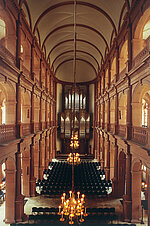
Neubaukirche
The Neubaukirche, originally built as a university church, now serves as an assembly hall for the University of Würzburg. When Catholic Prince-Bishop Julius Echter von Mespelbrunn founded the university in 1582, he also commissioned the construction of this church to accompany the new institution.
Although no longer used for religious services, the Neubaukirche now hosts university events such as balls, concerts, and academic conferences. Its 91-meter tower — the tallest in Würzburg — remains a striking feature of the city skyline.
In 2005, a carillon was installed in the tower, making the Neubaukirche one of the few universities in Europe to boast such an instrument. From May to December, regular carillon concerts are held and are open to the public.